
Where Sunrise on the Reaping was filmed — and why Panem has moved to Europe
Sunrise on the Reaping began principal photography in mid-2025 across Germany and northern Spain. Not one frame was shot in North America, and — despite an Australian lead — not one in Australia either. Here’s the map, and what it says about where big-budget production actually goes now.
Germany: the Capitol and District 12
Studio Babelsberg, Potsdam. The production’s stage base, just outside Berlin. Babelsberg is one of the oldest working studios on earth, founded in 1912, with more than twenty stages across a 42-acre site. It hosted The Ballad of Songbirds and Snakes in 2022, along with John Wick: Chapter 4 and The Matrix Resurrections. Bringing Sunrise back means the same stages, the same local crew base and, critically, the same construction and art-department relationships. Francis Lawrence has effectively established a permanent European home for Panem.
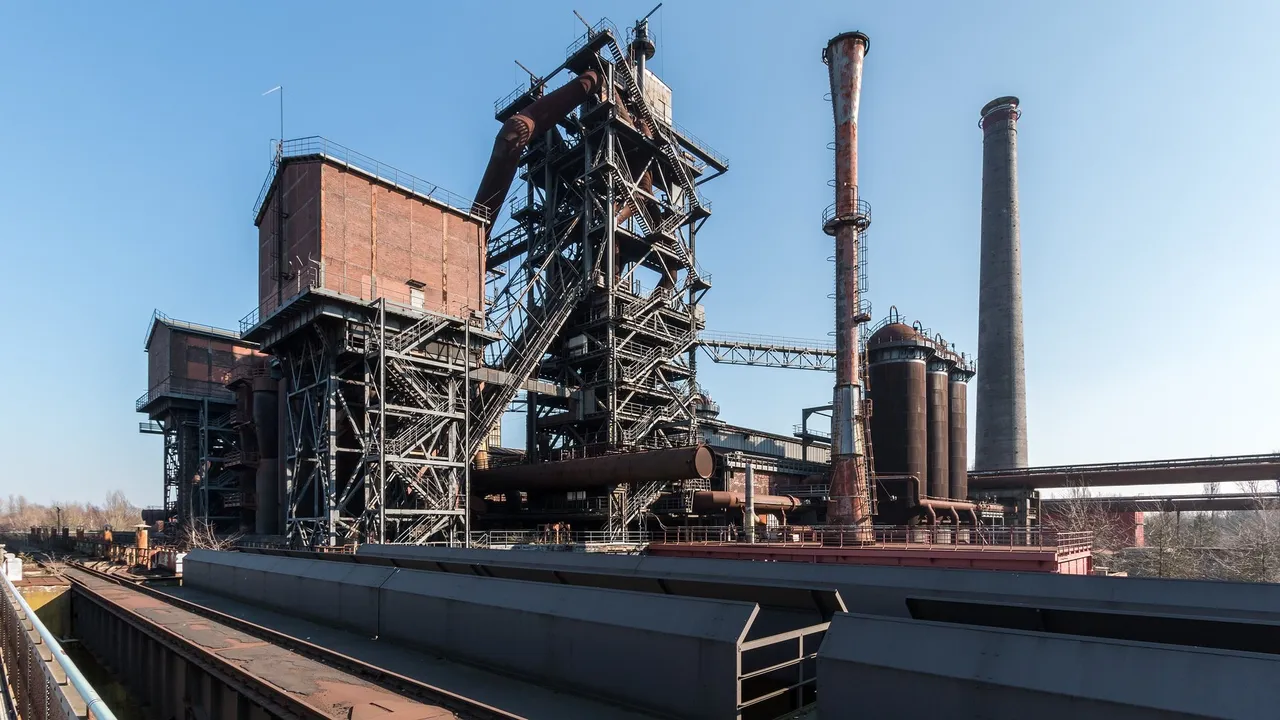
Landschaftspark Duisburg-Nord. This is the location that will do the most work on screen. It’s a decommissioned ironworks in the Ruhr Valley, shut down in 1985 and converted into a public park — blast furnaces, gasometers, ore bunkers and elevated walkways, all left standing and rusting. Set reports and extras sightings through the second half of 2025 placed the District 12 reaping sequence here, along with what appears to be the District 12 holding cells and the Lenore Dove phone call, shot around the Bunkersteg walkway.
If you know the site, the choice is obvious in hindsight. District 12 in this era is a mining district under an industrial boot, and Duisburg gives you industrial-scale decay that no set build could match for cost or authenticity. It’s also a genuinely great day out if you’re ever in the Ruhr — the park is free, open year-round, and lit at night by an installation by Jonathan Park.
Messe Berlin and the Velodrom. Two Berlin venues appear in fan-compiled location documentation: the Messe Berlin exhibition complex as the Capitol train station, and the Velodrom as the Launch Room. Both are the kind of hard-edged modernist architecture the franchise has always used to sell the Capitol — the same instinct that took Songbirds and Snakes to Wrocław’s Centennial Hall for the arena interior and Berlin’s Olympiastadion for its exterior.
A caveat worth stating plainly: the Duisburg, Messe and Velodrom identifications come from set sightings and fan location work, not from Lionsgate. They’re consistent and well-evidenced, but they’re not studio-confirmed. Babelsberg and Asturias are.
Spain: the arena
Somiedo and Teverga, Asturias. The arena and its surrounding wilderness were shot in the mountains of Asturias, in Spain’s green north — Somiedo Natural Park in particular, a protected reserve of glacial lakes, beech forest and high pasture that’s also one of the last strongholds of the Cantabrian brown bear.
The location company that handled the shoot has described the job in terms that tell you a lot about the production’s ambitions: locations of high ecological value, filmed during a period of high fire risk, requiring approvals from every relevant environmental agency and permits obtained under strict fire-prevention and environmental-impact conditions.
That’s a meaningful detail. Collins’s Second Quarter Quell arena is a deceptively beautiful killing field — the landscape itself is the weapon. Shooting it in a genuine protected wilderness rather than a backlot or a volume stage is a real choice, and an expensive one.
How this compares to the rest of the franchise
The original four films were an American production in every practical sense. The Hunger Games built District 12 at Henry River Mill Village in Burke County, North Carolina — a genuine abandoned mill town that later became a paying tourist attraction on the strength of it. The woods outside District 12 were Pisgah National Forest; the 74th arena was DuPont State Forest; the Cornucopia was North Fork Reservoir. The reaping was shot in Shelby. The Training Center was a former Philip Morris cigarette plant in Concord. Catching Fire and the Mockingjay films moved the base to Atlanta, with Hawaii for the Quarter Quell arena and Paris for the Capitol exteriors.
The Ballad of Songbirds and Snakes broke the pattern in 2022 by relocating to Poland and Germany. Sunrise has now consolidated that. Two consecutive films, same European base, same studio.
Why Europe, not North Carolina — or Australia
Three reasons, none of them mysterious.
The first is incentive economics. Germany’s federal film funding, the Medienboard Berlin-Brandenburg regional funds and Spain’s regional rebate schemes are aggressively competitive, and Babelsberg is set up to package them. Georgia’s incentive is generous but its stages have been under sustained demand, and North Carolina’s programme has never recovered the scale it had in 2011.
The second is that Europe simply has the geography this story needs within a short flight of a single studio base. Industrial ruin, brutalist civic architecture and high wilderness, all inside two countries.
The third is continuity. Lawrence built a crew there for Songbirds and Snakes and kept it. That’s worth more than a few percentage points of rebate.
The Australian angle, stated honestly
There isn’t one on the ground, and it’s worth saying so rather than manufacturing a connection.
Australia has an attractive offer — the Location Offset sits at 30 per cent, and the country has hosted enormous productions on the strength of it. But Sunrise was location-scouted and effectively locked before the book was even published; Nina Jacobson noted in March 2025 that locations had already been established. By the time an Australian was cast as the lead, the map was drawn.
Our stake in this film is Joseph Zada, not a shooting location. That’s a real stake. It just isn’t a geographical one.
If you’re planning a trip
Landschaftspark Duisburg-Nord is publicly accessible and free. Somiedo Natural Park is a working conservation area with strict access rules — go through the park’s own visitor infrastructure at Pola de Somiedo, and don’t go looking for set remnants, because there won’t be any and the permits explicitly required the production to leave no trace. Babelsberg runs a public film park adjacent to the working studio, though the stages themselves are closed.


